
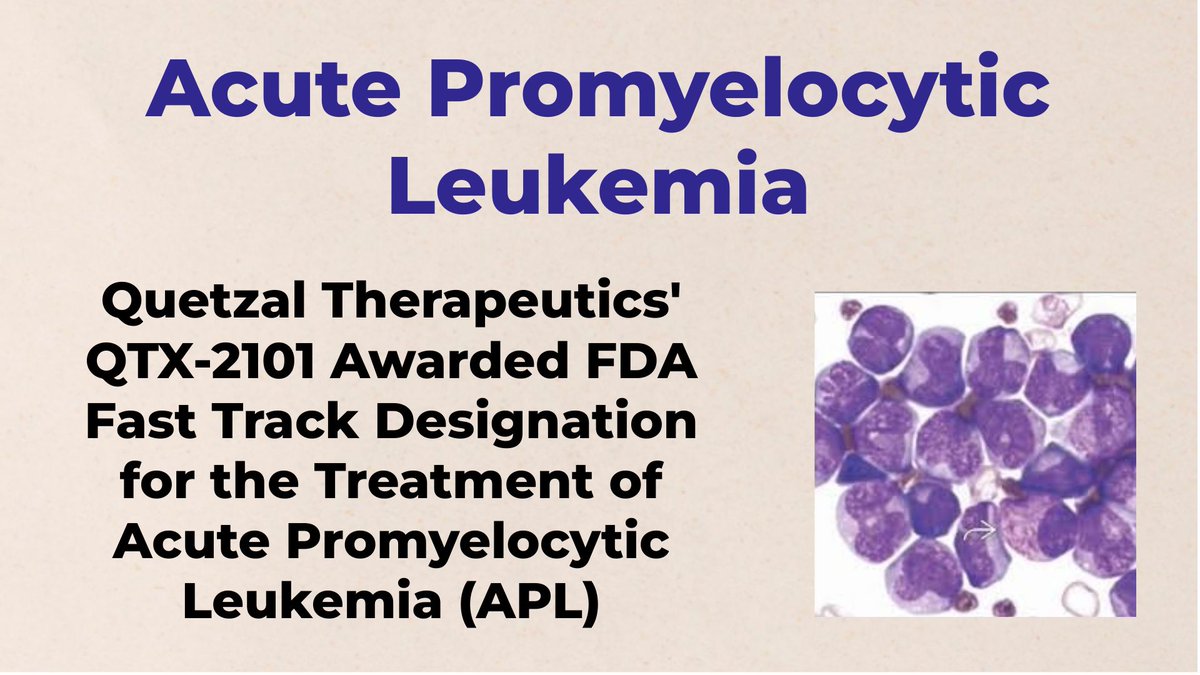
Quetzal Therapeutics, a biopharmaceutical company focused on developing treatments for rare diseases, today announced that the Food and Drug Administration (FDA) has granted Fast Track designation to QTX-2101, the company’s investigational oral arsenic trioxide capsule, for the treatment of patients with acute promyelocytic leukemia (APL).
The FDA Fast Track program is designed to facilitate the development and expedite the review of new therapies that address serious conditions and high unmet medical needs. For Quetzal Therapeutics, this designation for QTX-2101 underscores both the clinical seriousness of APL and the ongoing need to improve treatment accessibility and patient experience, even in the presence of effective standard-of-care regimens.
QTX-2101: An Oral Arsenic Trioxide Candidate for APL
QTX-2101 is a novel oral capsule formulation of arsenic trioxide developed to address key limitations associated with current intravenous arsenic trioxide therapy, including the need for frequent and often lengthy clinic visits. The goal of QTX-2101 is to simplify administration while preserving precise dosing and product stability in patients with APL.
QTX-2101 is currently being evaluated in a global, multicenter, randomized, controlled Phase III clinical trial in patients with newly diagnosed acute promyelocytic leukemia. In this pivotal study, the investigational oral capsule is being compared directly against standard-of-care therapy. The Phase III trial builds on pharmacokinetic and safety data generated from earlier Phase I studies conducted in the United States, which established the foundation for advancing the program into late-stage clinical development.
Regulatory Significance of FDA Fast Track Designation
The FDA Fast Track designation for QTX-2101 is intended to:
- Facilitate closer and more frequent interactions with the FDA during development
- Support more efficient clinical trial planning and execution
- Potentially enable a streamlined registration pathway through rolling review of a future marketing application, contingent on positive Phase III data
While Fast Track status can accelerate timelines, QTX-2101 remains an investigational therapy. Its safety and efficacy have not yet been established, and Fast Track designation does not alter the FDA’s standards for approval or guarantee that QTX-2101 will ultimately be approved.
Addressing Acute Promyelocytic Leukemia Unmet Needs
Acute promyelocytic leukemia (APL) is a rare and aggressive subtype of acute myeloid leukemia (AML), representing approximately 10–15% of all AML cases. It is characterized by the PML-RARA gene fusion and is associated with life-threatening bleeding complications and rapid disease progression if not promptly treated.
Advances in APL therapy, particularly arsenic trioxide and related regimens, have markedly improved survival. However, current standard-of-care approaches typically require patients to undergo numerous intravenous infusions over an extended treatment course. This intensive schedule can significantly disrupt daily life, limit work and social activities, and place substantial logistical and emotional burdens on both patients and caregivers.
By offering a potential oral alternative to intravenous arsenic trioxide, QTX-2101 is being developed to:
- Reduce dependence on frequent clinic-based infusions
- Improve treatment convenience and accessibility
- Potentially lessen the overall treatment burden without compromising therapeutic intent
The Fast Track designation reflects recognition of these ongoing needs within the APL patient community.
Conclusion
While modern treatment strategies have transformed APL into one of the most curable forms of leukemia, the treatment journey remains demanding. Many patients must adhere to a rigorous schedule of hospital or infusion center visits for intravenous therapies, which can be especially challenging for those living far from treatment centers or managing work, family and other responsibilities.
As a result, there remains a significant opportunity for innovative, patient-friendly treatment modalities, such as oral formulations that may maintain efficacy while improving treatment accessibility and quality of life.
Learn more about the evolving acute myeloid leukemia treatment landscape with DelveInsight’s latest report on Acute Myeloid Leukemia Market Insights.