
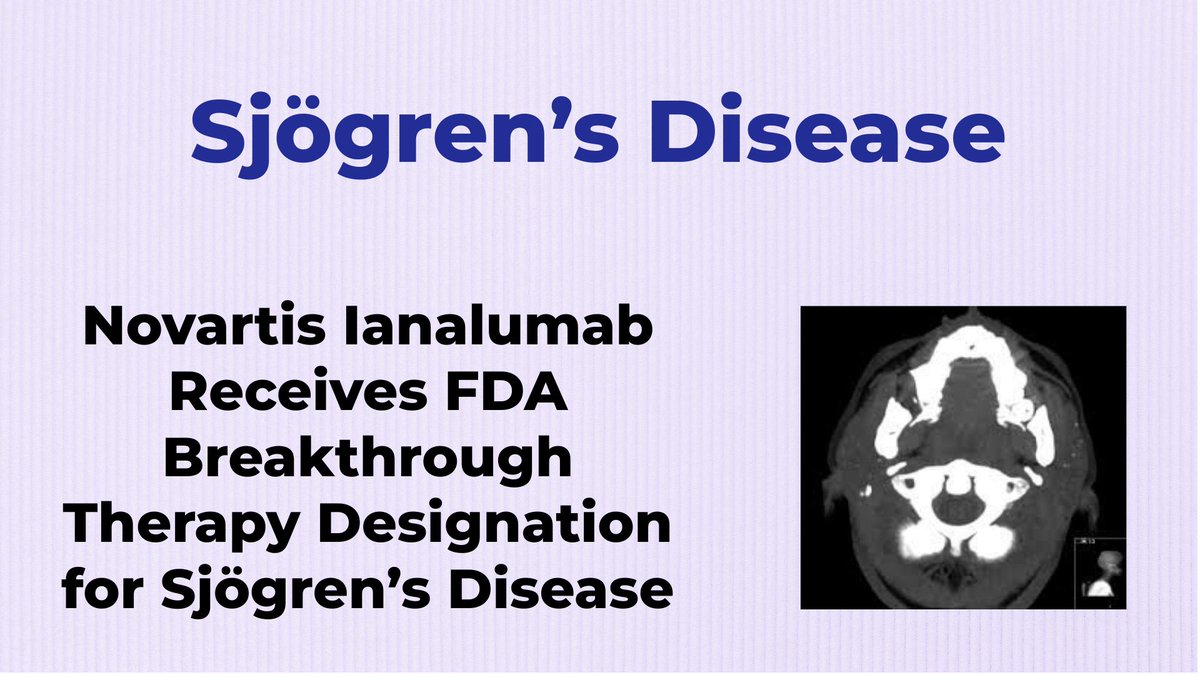
NEPTUNUS-1 and NEPTUNUS-2 met primary endpoints with clinically meaningful improvements in ESSDAI and patient-reported outcomes across 779 globally enrolled patients; ianalumab positioned to become first approved targeted treatment for second most prevalent rheumatic autoimmune disease
Novartis announced that the U.S. Food and Drug Administration (FDA) has granted Breakthrough Therapy Designation (BTD) to ianalumab for the treatment of Sjögren’s disease, recognizing the molecule’s potential to become the first targeted immunotherapy for a systemic autoimmune condition affecting millions worldwide with no approved disease-modifying treatment options. The designation is supported by positive efficacy and safety data from two global Phase 3 pivotal trials, NEPTUNUS-1 and NEPTUNUS-2, demonstrating statistically significant reductions in systemic disease activity as measured by the EULAR Sjögren’s syndrome Disease Activity Index (ESSDAI) compared to placebo in over 779 patients enrolled across 35 countries.
Ianalumab is a fully human, afucosylated IgG1 monoclonal antibody with a dual mechanism of action that combines enhanced antibody-dependent cellular cytotoxicity (ADCC)-mediated B-cell depletion with selective blockade of the B-cell activating factor receptor (BAFF-R)—a novel mechanistic combination designed to overcome limitations of single-agent B-cell depletion by targeting both the inflammatory driver (B cells) and the critical survival signal (BAFF) that sustains pathogenic B-cell populations in autoimmune disease.
Sjögren’s Disease: A Systemic, Progressive Autoimmune Disorder with Devastating Burden and Zero Approved Targeted Treatments
Sjögren’s disease (also known as Sjögren’s syndrome) is one of rheumatology’s most underrecognized and undertreated autoimmune conditions—a systemic, progressive disorder characterized by dysregulated B-cell immunity, chronic inflammation, and multi-organ involvement affecting millions of patients globally with no approved targeted therapeutic options.
Epidemiology and Disease Recognition Challenges: Sjögren’s disease is the second most prevalent systemic rheumatic autoimmune disease after rheumatoid arthritis, affecting approximately 0.25% of the population globally (approximately 2.5 million individuals worldwide). Remarkably, an estimated 50% of individuals with Sjögren’s disease remain undiagnosed or misdiagnosed, often labeled with fibromyalgia, chronic fatigue syndrome, or depression when presenting with the disease’s cardinal symptoms.
The disease predominantly affects middle-aged and older women (9:1 female-to-male ratio), with peak incidence in the 40-49 age range. Despite its high prevalence, Sjögren’s disease remains severely understudied and under-resourced compared to other rheumatic conditions like rheumatoid arthritis and systemic lupus erythematosus—a disparity reflecting both diagnostic challenges and the heterogeneous clinical presentation that has historically obscured recognition of the disease’s systemic nature.
Clinical Manifestations and Systemic Involvement: While the hallmark glandular sicca features (dry mouth and dry eyes secondary to salivary and lacrimal gland dysfunction) are well-recognized, Sjögren’s disease manifests as a profoundly systemic condition affecting virtually every organ system:
- Systemic Manifestations (present in 50-70% of patients): Fatigue (65-70% prevalence, often the most debilitating symptom), musculoskeletal pain, fever, peripheral neuropathy (affecting central and peripheral nervous systems)
- Pulmonary Involvement: Interstitial lung disease, pulmonary hypertension, bronchiolitis obliterans organizing pneumonia (BOOP)
- Renal Manifestations: Tubulointersticial nephritis, glomerulonephritis, renal tubular dysfunction
- Hematologic Abnormalities: Cytopenias (leukopenia, anemia, thrombocytopenia), cryoglobulinemia, monoclonal gammopathy
- Vascular Involvement: Vasculitis affecting small and medium-sized vessels, causing cutaneous manifestations (purpura), systemic involvement (mononeuritis multiplex)
- Lymphoproliferation and Malignancy: Dramatically increased risk of non-Hodgkin B-cell lymphoma—the most serious complication of Sjögren’s disease, with 8.7-fold increased lymphoma risk compared to general population
Disease Burden and Quality of Life Impact: The cumulative impact of Sjögren’s disease on patients’ lives is profound. Fatigue—reported in 65-70% of patients—consistently ranks as the most debilitating symptom and strongest predictor of poor quality of life, independent of measured disease activity. Pain, dryness, and systemic manifestations combine to produce functional impairment, work disability, depression, and psychological distress that substantially exceed what would be predicted by objective measures of disease activity.
Lymphoma Risk and Mortality: The development of non-Hodgkin B-cell lymphoma represents Sjögren’s disease’s most serious complication and the primary driver of excess mortality in affected patients. Approximately 5-10% of Sjögren’s patients develop lymphoma over their disease course, with risk increasing significantly in patients with high disease activity, cryoglobulinemia, cytopenias, and germinal center-like structures in salivary glands. Emerging evidence suggests that blocking BAFF—which drives B-cell survival and ectopic germinal center formation in inflamed salivary glands—may reduce lymphoma risk by suppressing the chronic antigenic stimulation that drives B-cell malignant transformation.
Current Treatment Paradigm: Absence of Approved Targeted Options: Critically, there are no FDA-approved therapies specifically designed to treat Sjögren’s disease. Current management relies entirely on symptomatic and off-label approaches:
- Symptomatic Treatment: Artificial tears and saliva, anticholinergic agents for dry mouth
- Off-Label Immunosuppression: Hydroxychloroquine (antimalarial, marginal efficacy), methotrexate, azathioprine, corticosteroids (limited efficacy, toxicity concerns)
- Recent Experience with B-Cell Depletion: Rituximab (off-label CD20 depletion) has shown some efficacy but exhibits a critical limitation: after rituximab-mediated B-cell depletion, circulating BAFF levels surge 3-fold within 12 weeks as B cells recover, driving rapid repopulation with autoreactive B cells and loss of therapeutic benefit.
This therapeutic void—combined with the disease’s systemic nature, lymphoma risk, and devastating patient burden—creates an extraordinarily compelling unmet medical need that ianalumab is uniquely positioned to address.
Learn more about the evolving Sjögren’s Disease treatment landscape. Download the Sjögren’s Disease Market Insights report from DelveInsight
BAFF-R Signaling in Sjögren’s Disease Pathophysiology: A Validated Therapeutic Target Across B Cells, T Cells, and Germinal Center Formation
The B cell-activating factor (BAFF) system emerges from recent research as a critical pathophysiologic driver in Sjögren’s disease, representing a validated therapeutic target with mechanism-of-action specificity that addresses multiple dimensions of disease pathology.
BAFF System Architecture and Receptor Expression:
BAFF (also known as BLyS—B lymphocyte stimulator) is a TNF family cytokine produced by multiple cell types including monocytes, macrophages, dendritic cells, and local tissue stromal cells, particularly salivary epithelial cells in Sjögren’s disease. BAFF binds to three receptors on B cells and T cells—BAFF-R (B-cell maturation antigen receptor), BCMA (B-cell maturation antigen), and TACI (transmembrane activator and calcium modulator and cyclophilin ligand interactor)—each with distinct expression patterns and functional consequences.
BAFF-R-Mediated B-Cell Survival and Activation:
BAFF-R engagement activates both classical and alternative NF-κB signaling pathways, delivering pro-survival signals that prevent apoptosis of transitional B cells, mature B cells, and long-lived plasma cells. In Sjögren’s disease, elevated BAFF concentrations in both circulating serum and local salivary gland microenvironments perpetuate survival of autoreactive B cells that would otherwise undergo apoptosis—a critical step in maintaining disease-driving B-cell populations.
Germinal Center Formation and Ectopic Lymphoid Tissue:
Recent immunopathologic studies have identified ectopic germinal center-like structures within inflamed Sjögren’s salivary glands—lymphoid aggregates containing proliferating B cells, follicular helper T cells (Tfh), and activated dendritic cells organized in anatomic proximity that enables continuous antigen-driven B-cell expansion and somatic hypermutation. BAFF drives ectopic germinal center formation through multiple mechanisms: (1) supporting survival of germinal center B cells, (2) providing costimulation to follicular helper T cells via TACI/BCMA interactions, and (3) promoting development of tissue-resident memory B cells that perpetuate localized autoimmunity.
BAFF-Driven Lymphomagenesis:
Critically, elevated BAFF levels correlate with lymphoma development risk in Sjögren’s disease patients—a finding indicating that BAFF-driven B-cell survival and ectopic germinal center activation not only perpetuates autoimmunity but also creates the microenvironment from which B-cell lymphomas emerge. Blocking BAFF-R signaling theoretically interrupts this progression from chronic B-cell activation → germinal center formation → clonal B-cell expansion → malignant transformation.
T-Cell Costimulation and Broader Immune Modulation:
Beyond B-cell effects, BAFF provides critical costimulatory signals to T cells—augmenting CD4+ T-cell activation through PI3K/Akt pathway engagement and promoting Tfh cell development through noncanonical NF-κB signaling. BAFF inhibition therefore modulates both B-cell and T-cell immunity, potentially suppressing the coordinated autoimmune collaboration that perpetuates Sjögren’s pathology.
Ianalumab’s Dual-Mechanism Architecture: Enhanced B-Cell Depletion Plus BAFF-R Antagonism
Ianalumab’s therapeutic design elegantly addresses the fundamental limitation of rituximab monotherapy (loss of durability due to BAFF-driven B-cell repopulation) by combining two complementary mechanisms:
Enhanced ADCC-Mediated B-Cell Depletion:
Ianalumab is a fully human, afucosylated IgG1 monoclonal antibody targeting CD19 (a pan-B-cell marker). The afucosylation modification (removal of the core fucose sugar from the antibody’s Fc region) dramatically enhances binding affinity to Fcγ receptor IIIa on NK cells and macrophages, increasing antibody-dependent cellular cytotoxicity (ADCC) efficiency up to 50-100 fold compared to conventional IgG1 antibodies. This enhanced ADCC results in more efficient B-cell lysis and deeper, more sustained B-cell depletion than earlier-generation B-cell-targeting antibodies.
BAFF-R Blockade and Prevention of B-Cell Repopulation:
Uniquely, ianalumab directly blocks BAFF-R signaling—either through steric hindrance (physical blockade of BAFF-R/BAFF interaction) or through allosteric modulation of BAFF-R conformational states that impair downstream signaling. By simultaneously depleting B cells (removing BAFF receptors) AND blocking BAFF-R signaling (preventing BAFF-driven rescue of residual B cells), ianalumab creates a dual brake on B-cell recovery:
- Early Phase (0-4 weeks): ADCC-mediated B-cell depletion removes the primary BAFF-R-expressing cellular compartment
- Intermediate Phase (4-12 weeks): BAFF-R blockade prevents BAFF-driven survival of newly emerging B cells during the recovery phase—a critical window where rituximab treatment alone fails
- Long-term: Sustained BAFF-R antagonism maintains suppression of pathogenic B-cell populations and prevents ectopic germinal center formation
Rationale for Dual-Mechanism Approach:
The dual mechanism is supported by mechanistic understanding of rituximab resistance: after rituximab-mediated B-cell depletion, circulating BAFF levels surge 3-fold because B cells (the primary BAFF-R-expressing cells) are depleted, eliminating BAFF receptor availability for BAFF binding. This BAFF surge drives rapid repopulation of newly emergent B cells with autoreactive properties, causing loss of sustained therapeutic benefit. By simultaneously blocking BAFF-R, ianalumab prevents this BAFF surge-driven B-cell recovery, theoretically enabling sustained therapeutic benefit.
Regulatory Framework: Breakthrough Therapy Designation and Accelerated Pathway
The FDA’s Breakthrough Therapy Designation represents formal recognition that ianalumab demonstrates potential for substantial improvement over available therapies for a serious condition with significant unmet need.
Breakthrough Therapy Designation Benefits:
- Priority Review: Target FDA review time of 6 months (vs. standard 10-month review)
- Expedited FDA Communication: Dedicated regulatory meetings to optimize development pathway
- Clinical Trial Design Guidance: FDA assistance in designing post-approval confirmatory trials if needed
- Potential Accelerated Approval Pathway: If Phase 3 efficacy is compelling and safety profile remains acceptable, FDA may grant accelerated approval based on disease activity endpoints (ESSDAI reduction), with post-approval requirement for additional confirmatory studies regarding patient-reported outcomes or long-term durability
- Additional Regulatory Considerations: Fast Track Designation (previously awarded in 2016) and potential for priority review vouchers in future programs
Global Regulatory Strategy:
Novartis has indicated plans to submit regulatory applications globally commencing in Q1 2026, encompassing submissions to the FDA (United States), EMA (European Union), and other major regulatory authorities.
Strategic Implications: First Targeted Therapy for Zero-Option Disease
If approved, ianalumab would represent the first FDA-approved targeted immunotherapy specifically designed to treat Sjögren’s disease—a disease affecting millions globally with zero currently approved therapies addressing disease pathophysiology.
This approval would represent a paradigm shift in Sjögren’s disease management, transitioning from symptomatic treatment and off-label immunosuppression to evidence-based, targeted B-cell and BAFF-directed therapy addressing the disease’s fundamental autoimmune mechanism.
Unmet Need Quantification:
- ~2.5 million Sjögren’s patients globally, with estimated 50% remaining undiagnosed
- 1.25+ million diagnosed Sjögren’s patients currently lacking approved disease-modifying therapy
- 50-70% with systemic manifestations requiring targeted immunotherapy
- 5-10% at risk of lymphoma development—a serious complication for which preventive therapy could be transformative
Sjögren’s Disease Market Opportunity:
Given the absence of approved therapies and Sjögren’s disease’s prevalence as the second most common rheumatic autoimmune disease, the market opportunity for the first approved therapy is substantial. Analysts project the Sjögren’s disease therapeutics market could reach >$1 billion annually if ianalumab achieves regulatory approval and market adoption comparable to other biologic therapies for rheumatic autoimmune diseases (rituximab in RA, anti-TNF agents, IL-6 inhibitors).
DelveInsight’s report covers the in-depth Sjögren’s Disease market opportunities. Download the report now.
Competitive Positioning and Market Landscape
Ianalumab enters a Sjögren’s disease therapeutic landscape that is remarkably barren of approved options:
Sjögren’s Disease Approved Therapies:
- None specifically for Sjögren’s disease (unprecedented among common rheumatic autoimmune diseases)
- Off-label use of hydroxychloroquine, methotrexate, corticosteroids with limited efficacy
Off-Label or Experimental Approaches:
- Rituximab (CD20 B-cell depletion): Moderate efficacy but limited durability due to BAFF surge-driven B-cell repopulation
- Belimumab (BAFF antagonist alone): Requires Phase 3 development
- Sequential rituximab + belimumab: Investigational, not standard of care
Ianalumab’s Differentiation:
- First-in-class dual mechanism: B-cell depletion + BAFF-R blockade simultaneously
- Replicate Phase 3 efficacy: Two independent trials both met primary endpoint
- Superior mechanism: Theoretically overcomes ritual
Ianalumab’s durability limitation through concurrent BAFF-R blockade
- Global regulatory approval: First approved targeted therapy for Sjögren’s disease
Novartis’s Immunology Platform and Strategic Focus
The ianalumab approval potential reflects Novartis’s broader strategic commitment to advancing innovative therapies across rheumatologic, dermatologic, and allergic autoimmune diseases. The company’s immunology pipeline includes multiple first-in-class and best-in-class programs targeting distinct autoimmune pathways, positioning Novartis as a leader in precision autoimmune disease therapeutics.
Ianalumab represents a crown jewel in this immunology strategy—a first-in-class therapy addressing an orphaned disease with a novel, validated mechanism that combines enhanced ADCC with direct BAFF pathway antagonism.
Conclusion: Transforming Care for an Orphaned Disease
For decades, Sjögren’s disease has languished as an orphaned indication within rheumatology—a disease affecting millions of patients, causing devastating systemic complications, driving lymphoma development, and severely impacting quality of life, yet lacking any approved targeted therapy. Patients with Sjögren’s disease have been forced to rely on symptomatic management and off-label immunosuppression with inconsistent efficacy and substantial safety concerns.
Novartis’s ianalumab, guided through development with a mechanistically rational dual approach targeting both B-cell survival and BAFF-R-driven B-cell activation, offers the prospect of transforming this therapeutic landscape. The positive Phase 3 NEPTUNUS-1 and NEPTUNUS-2 trials—the first-ever demonstration of statistically significant disease activity reduction in large, global Sjögren’s disease trials—provide compelling evidence that B-cell and BAFF-directed targeting addresses the disease’s fundamental pathophysiology.
The FDA’s Breakthrough Therapy Designation validates this potential and accelerates ianalumab toward regulatory review and potential approval in early 2026. If approved, ianalumab would become not merely another immunosuppressive option but rather the first approved targeted therapy specifically designed to treat Sjögren’s disease—a milestone that could fundamentally reshape the therapeutic landscape for a disease that has been therapeutically neglected for far too long.