

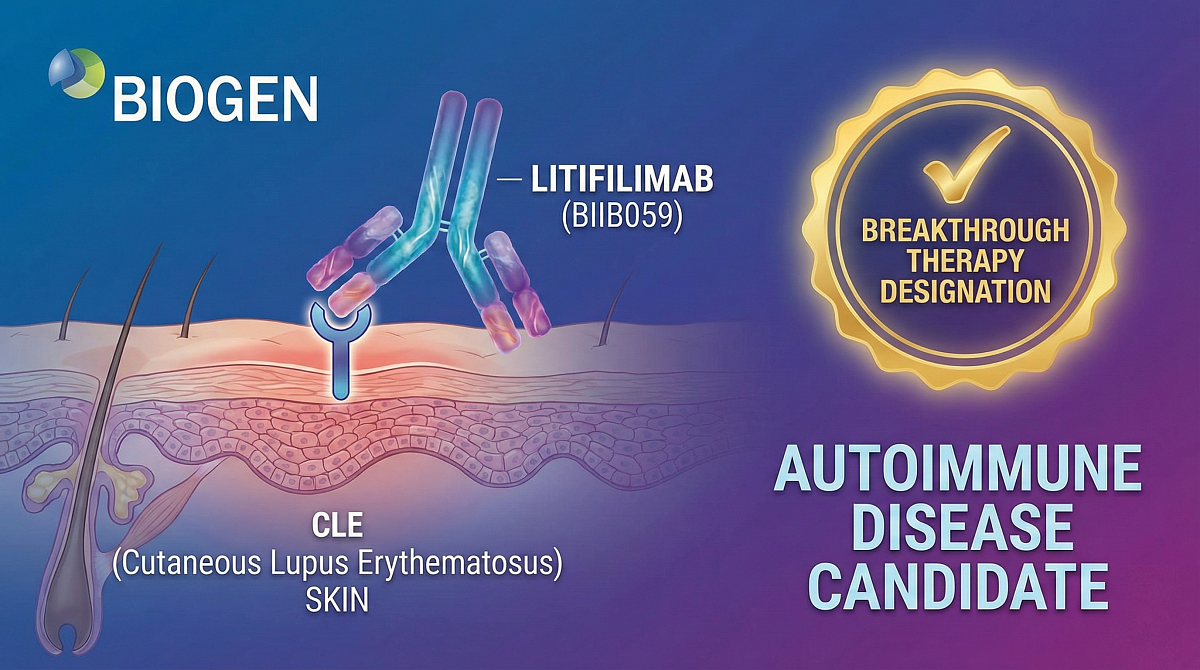
The Food and Drug Administration (FDA) has granted breakthrough therapy designation to litifilimab (BIIB059), a humanized monoclonal antibody developed by Biogen, for the treatment of cutaneous lupus erythematosus (CLE). This regulatory milestone represents a significant advancement for patients living with an orphan disease that currently lacks FDA-approved therapeutic options.
Recognition Of Cutaneous Lupus Erythematosus as a Serious Autoimmune Condition
The FDA’s breakthrough therapy designation for litifilimab underscores the agency’s recognition of cutaneous lupus erythematosus as a serious autoimmune condition with substantial unmet clinical needs. This expedited pathway is granted to investigational therapies that demonstrate preliminary clinical evidence of substantial improvement over existing treatments for serious or life-threatening conditions.
The designation is based on robust clinical data from the Phase 2 LILAC trial, a randomized, double-blind, placebo-controlled study that evaluated litifilimab’s efficacy and safety profile in patients with active cutaneous lupus. The trial’s positive outcomes support the regulatory finding that litifilimab addresses a critical gap in dermatologic care where no disease-specific therapies currently exist.
Litifilimab Clinical Evidence: LILAC Trial Results Show Significant Skin Disease Improvement
The trial met its primary endpoint, demonstrating percentage change from baseline in the Cutaneous Lupus Erythematosus Disease Area and Severity Index–Activity (CLASI-A) score at week 16. Across all litifilimab-treated cohorts, a clear dose-response relationship was observed, with higher proportions of patients achieving clinically meaningful improvements compared to placebo.
Response Thresholds and Clinical Relevance
The secondary analyses revealed that litifilimab-treated participants achieved significantly higher proportions of CLASI response thresholds:
- CLASI-20 response (≥20% improvement): 3.8–72.1% in litifilimab groups vs. 0–43.8% in placebo
- CLASI-50 response (≥50% improvement): Significantly higher in litifilimab arms, with significant differences emerging as early as week 4
- CLASI-70 response (≥70% improvement): Greater proportions in treatment groups
- CLASI-90 response (≥90% improvement): Notable achievement in litifilimab-treated patients
Additionally, ≥7-point absolute reductions in CLASI-A scores were achieved by 13.8%–43.9% of litifilimab-treated participants from weeks 4 to 16, compared with 10.5%–21.1% in the placebo arm, indicating rapid onset of clinical benefit.
Litifilimab Safety Profile and Tolerability
Safety findings from the phase 2 program demonstrated a generally favorable tolerability profile consistent with expectations for an immunomodulatory biologic therapy. Most adverse events were mild to moderate in severity, with the most frequently reported events including upper respiratory tract infections, headache, and injection-site reactions. However, herpes infections were observed in patients receiving higher doses, underscoring the importance of continued safety surveillance in larger, longer-duration phase 3 studies and post-marketing monitoring.
Litifilimab Mechanism of Action: Targeting Plasmacytoid Dendritic Cells via BDCA2
Litifilimab represents a mechanistically novel approach to cutaneous lupus management through its targeted inhibition of blood dendritic cell antigen 2 (BDCA2), a receptor expressed exclusively on plasmacytoid dendritic cells (pDCs).
Litifilimab binds specifically to BDCA2 on pDCs, inducing internalization of the receptor and disrupting downstream signaling pathways. This engagement attenuates the production of both type I and type III interferons and associated pro-inflammatory chemokines and cytokines. By selectively modulating pDC-mediated immune responses without broadly suppressing adaptive immunity, litifilimab offers a potentially safer alternative to conventional immunosuppressants and systemic corticosteroids, which are frequently associated with significant adverse effects.
Cutaneous lupus erythematosus is characterized by aberrant immune activation, with plasmacytoid dendritic cells playing a pivotal role in disease pathogenesis. These specialized immune cells produce excessive amounts of type I interferons (particularly interferon-alpha), along with pro-inflammatory cytokines including tumor necrosis factor-alpha (TNF-α) and interleukin-6 (IL-6). This dysregulated interferon signaling drives the inflammatory cascade responsible for the characteristic skin manifestations and systemic complications of lupus.
The underlying scientific rationale for targeting type I interferon has strong epidemiological and translational support. Over two decades ago, Lupus Research Alliance-funded research identified type I interferons as central drivers of lupus pathogenesis, establishing the scientific foundation for the development of interferonmodulating therapies like litifilimab.
The Unmet Clinical Need: Why Cutaneous Lupus Erythematosus Requires Novel Therapeutics
Cutaneous lupus erythematosus represents a spectrum of autoimmune skin diseases comprising acute cutaneous lupus (ACLE), subacute cutaneous lupus (SCLE), and chronic cutaneous lupus (CCLE). The condition affects an estimated 73–146.5 per 100,000 individuals in the general population, with an incidence of 3.9–4.4 per 100,000 person-years. Women are affected at approximately 2.3 times the rate of men, and certain ethnic populations, including Māori and Pacific Islander communities, experience higher disease prevalence.
Approximately 70–85% of patients with systemic lupus erythematosus develop cutaneous manifestations, making CLE a common and clinically significant feature of lupus disease. Patients frequently experience relapsing disease characterized by pain, pruritus, photosensitivity, and progressive skin damage including irreversible scarring alopecia and permanent dyspigmentation—consequences that substantially diminish health-related quality of life and psychosocial well-being.
Download DelveInsight’s cutaneous lupus erythematosus market report to discover more insights on the cutaneous lupus erythematosus epidemiology.
Current Standard of Care: Limitations and Off-Label Use
Despite the significant clinical burden of cutaneous lupus, the condition has lacked FDA-approved, disease-specific therapies. Current management relies exclusively on off-label use of antimalarial agents (particularly hydroxychloroquine), topical and systemic corticosteroids, topical calcineurin inhibitors, and various systemic immunosuppressants. While these agents provide symptomatic relief in some patients, they do not modify underlying disease progression, carry substantial risk of long-term toxicity, and demonstrate variable and often insufficient efficacy.
Systemic corticosteroids and immunosuppressants are limited by significant adverse effects including infections, metabolic disturbances, organ toxicity, and reduced patient quality of life. The absence of targeted, disease-modifying therapies has been a longstanding challenge in the dermatologic care of patients with cutaneous lupus—a gap that litifilimab’s FDA breakthrough designation now addresses.
Path Forward: The AMETHYST Phase 3 Program and Expected Timeline
Litifilimab is currently being evaluated in the AMETHYST Phase 3 clinical development program, designed to further establish the drug’s long-term efficacy, safety, and tolerability across diverse patient populations with active subacute and chronic cutaneous lupus erythematosus. The AMETHYST program includes both the core Phase 3 trial and a long-term extension (LTE) study providing two years of continuous treatment and safety monitoring. Patients in the LTE receive litifilimab 225 mg subcutaneously, allowing assessment of sustained clinical benefit and long-term safety profile.
Phase 3 results are anticipated in 2027, which would position litifilimab for potential FDA approval in the subsequent one to two years, provided the ongoing trials demonstrate sustained clinical benefit and manageable safety.
Expert Perspective: Recognition from the Dermatologic and Lupus Communities
The breakthrough designation has been met with enthusiasm from clinical experts and patient advocacy organizations.
Dr. Victoria Werth, MD, MS, Professor of Dermatology at the Perelman School of Medicine at the University of Pennsylvania and researcher on the Phase 3 AMETHYST trial, commented: “The breakthrough therapy designation for litifilimab illustrates the FDA’s recognition of cutaneous lupus as a serious disease that urgently requires new therapies. With topical steroids and antimalarials as the initial therapies for managing CLE and no alternatives specifically approved for CLE, there is a need for effective, targeted treatments, and that could be a drug like litifilimab.”
Albert T. Roy, President and CEO of the Lupus Research Alliance, added: “CLE symptoms affect 70–85% of people with lupus and can be debilitating. This designation for litifilimab is critical to accelerate progress for a condition for which there is no specifically approved treatment. Pioneering work funded by the Lupus Research Alliance over two decades ago discovered that type 1 interferons—like those targeted by litifilimab—play a major role in inflammation and drive the development of lupus, setting the stage for the progress seen by treatments in development such as this from Biogen.”
Dr. Priya Singhal, MD, MPH, Executive Vice President and Head of Development at Biogen, noted: “The FDA’s designation reinforces Biogen’s belief that litifilimab could be a first-in-class therapy targeting BDCA2 for cutaneous lupus erythematosus. This designation is a significant milestone for litifilimab as we advance the ongoing AMETHYST Phase 3 study, with the goal of bringing a new potential therapeutic option to the millions of people living with CLE.”
Conclusion
The FDA breakthrough therapy designation for litifilimab represents a watershed moment for patients with cutaneous lupus erythematosus. For the first time, a rationally designed, mechanistically targeted therapy that addresses the pathogenic immune pathways central to CLE pathogenesis has achieved regulatory recognition of its therapeutic potential.
The compelling phase 2 LILAC trial data demonstrating dose-dependent improvements in skin disease activity, coupled with a manageable safety profile, provide strong scientific justification for the accelerated pathway. As the AMETHYST Phase 3 program progresses toward completion in 2027, and assuming continued positive efficacy and safety data, litifilimab could become the first FDA-approved disease-modifying therapy specifically indicated for cutaneous lupus erythematosus—fundamentally transforming the treatment paradigm for this orphan autoimmune disease.
This designation also signals the FDA’s commitment to advancing therapies for serious dermatologic conditions and validates the scientific hypothesis that type I interferon dysregulation represents a targetable pathogenic mechanism in lupus. Success of litifilimab may catalyze additional development efforts in this therapeutic space and provide hope for the millions of patients worldwide living with active cutaneous lupus.
Learn more about the evolving cutaneous lupus erythematosus treatment landscape with DelveInsight’s latest report on Cutaneous Lupus Erythematosus Market Insights